Latest Tools and Techniques for Counterfeit Parts Identification and Mitigation
|
Bhanu Sood
|
| CALCE/Univ. of Maryland |
|
|
|
| Contributors: |
| Anne Poncheri, Anne Poncheri Quality Consulting |
| Sultan Ali Lilani, Integra Technologies |
|
| Register here for the CALCE SMTA Counterfeit Electronic Parts and Electronic Supply Chain Conference |
Counterfeit electronics components continue to make news. In recent years, the prevalence of these fake parts has only increased, with reports of parts discovered in military systems, medical devices and process control equipment. This increased risk has not only focused the spotlight on counterfeit component detection methods, but the ability of these techniques to uncover suspect parts that are produced using sophisticated counterfeit creation techniques.
|
|
| 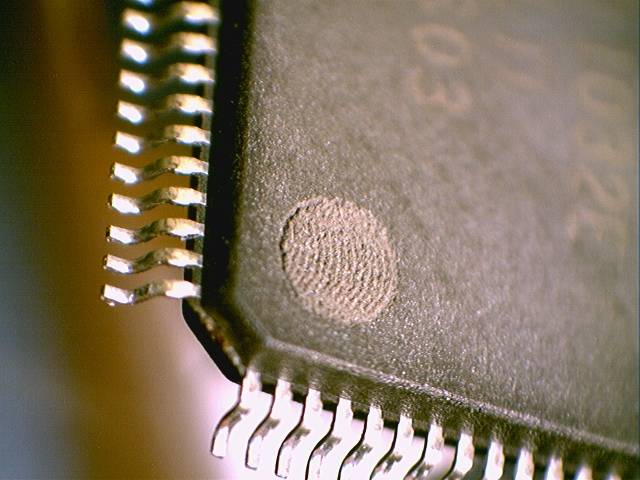
Evidence of Laser Marked Cavity
|
| The full day workshop begins with an introduction to the electronic parts supply chain and the sources of counterfeit parts. Attendees will learn about the status of the electronic part distribution market and how this market has changed over the past decades. A primer on the diverse counterfeit part creation techniques will be provided. The rest of the workshop provides detailed instruction on various non-destructive techniques, destructive and analytical steps for inspecting suspect counterfeit parts.
The techniques are based on the AS6171 Aerospace Standard (currently in draft; scheduled for release in late 2014) which standardizes the test and inspection procedures, workmanship criteria, and minimum training and certification requirements to detect counterfeit electrical, electronic, and electromechanical parts. The Standard ensures consistency across the supply chain for test techniques and requirements based on assessed risk of the application, component, supplier, and other relevant risk factors. The Instructors of this Workshop have Chaired sub-groups within the AS6171 and will include a hands-on workshop on optical inspection using digital microscopes.
|
Workshop attendees will also learn how to effectively engage testing laboratories in a cost effective manner to determine risk of counterfeit components. Also included are discussions of minimum level of inspection, sampling plan based on tier level of accepted risk, and reject criteria. Attendees will also get an overview of the certification and training requirements for each AS6171 inspection technique.
|
|
|
|
|
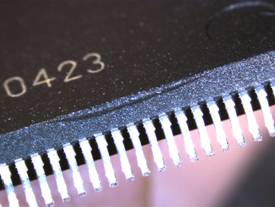
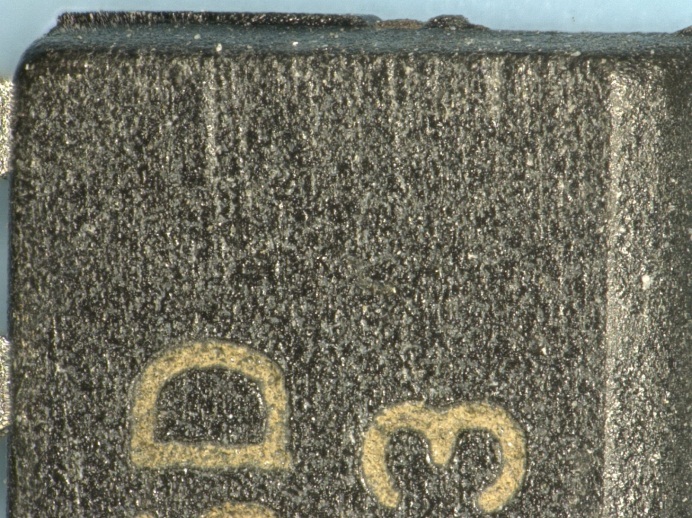
Evidence Of Blacktop (Overspray) |
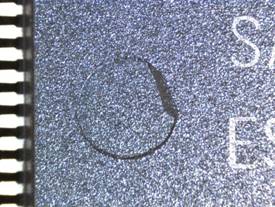
Mold Indents, Filled or Blacktopped |
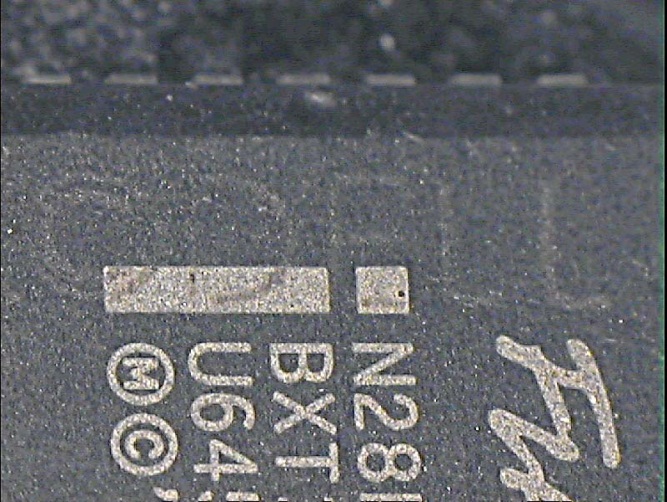
Visible Scratch Marks or Unidirectional Abrasions |
|
|
|
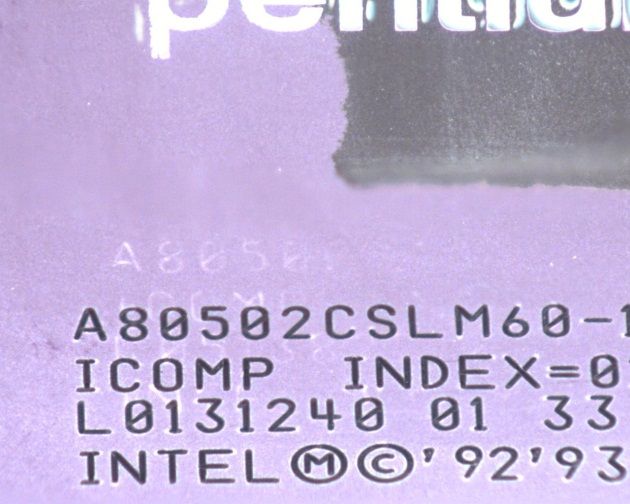
Previous Marking Partially Visible on the Package
|
Lecture topics in workshop will include:
- What are counterfeit electronic parts?
- General history of counterfeit electronic components
- Testing and characterization
- Non-destructive (optical, EVI, X-ray, XRF)
- Hands-on session with digital microscopes
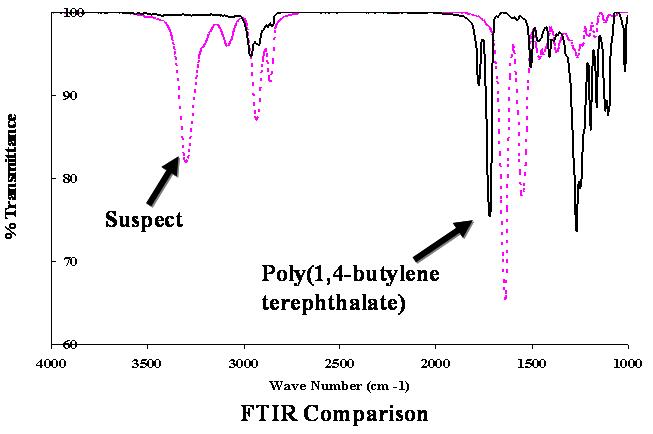
- Materials Characterization Techniques (FT-IR, DSC, TMA)
- Electrical Characterization (Basic VI, Parametric, fixtures)
- Destructive techniques (DPA, physical analysis, delayering)
- Environmental stress testing (temperature, HAST)
- Miscellaneous techniques (TGA)
|
Who Should Attend?
- Component Engineers
- Failure Analysis Engineers
- Reliability Engineers
- Engineering Managers
- Procurement Managers
- Quality Assurance functions
|
|
|
|
The Center for Advanced Life Cycle Engineering (CALCE), the largest electronic products and systems research center focused on electronics reliability, is dedicated to providing a knowledge and resource base to support the development of competitive electronic components, products, and systems.
Copyright (C) 2014 CALCE. All rights reserved.
|
|
|